
This dhokla recipe gives you a soft, spongy, lightly sweet and tangy khaman made with besan (gram flour) in about 35 minutes, with no fermentation and no special steamer. The batter is raised with fruit salt, or with baking soda and citric acid or lemon juice, then steamed in a cake tin inside a kadai or a pressure cooker with the weight taken off.
Most instant dhokla goes wrong at three points: the batter is too thick, the raising agent sits in the batter too long before it reaches the steam, or there is too much soda for the turmeric. This version tells you exactly where those points are and what to look for, so your first plate comes out tall, yellow and full of holes, ready to soak up the sweet and sour tempering.
35 minServes 4Vegetarian290 kcal
Jump to recipe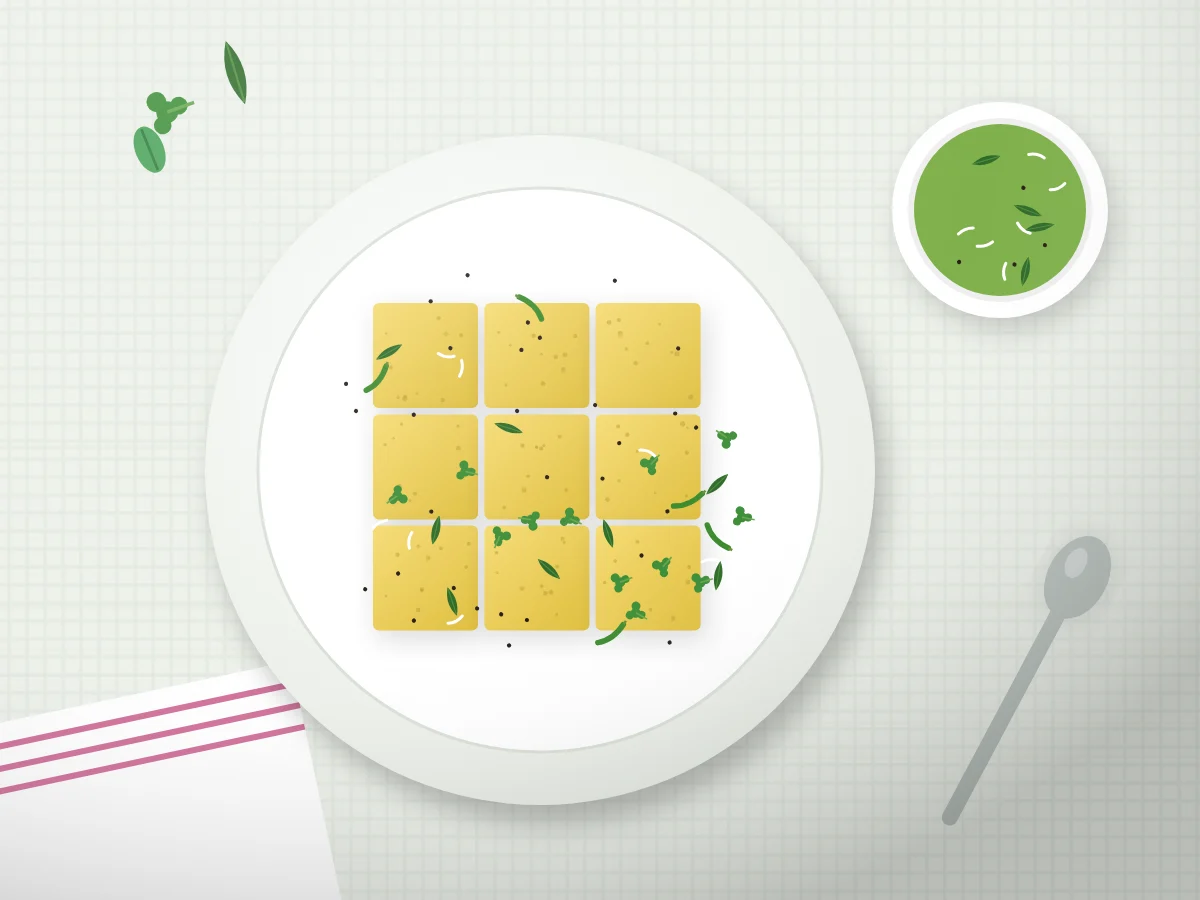
Recipe card
Instant Khaman Dhokla
Spongy steamed besan dhokla raised with fruit salt and finished with a mustard, sesame and curry leaf tempering soaked in sweetened lemon water.
- Prep
- 10 min
- Cook
- 25 min
- Total
- 35 min
- Serves
- 4
Ingredients
Makes 1 tin, about 16 pieces
Dhokla batter
- 1½ cups besan (gram flour), sifted
- 1 tbsp fine rava (sooji)optional, for a firmer bite
- 1 tsp sugar
- 1 inch gingercrushed with the chilli to a paste
- 1 green chillicrushed with the ginger
- ¼ tsp haldi (turmeric powder)level, not heaped
- saltabout 3/4 tsp
- 1½ tbsp lemon juice
- 1 tbsp oil
- ¾ cup wateradd slowly, you may need a little more
- 1½ tsp fruit salt (plain, unflavoured)or see the note for soda and citric acid
Tempering (vaghar)
- 2 tbsp oil
- 1 tsp rai (mustard seeds)
- 1 tsp til (white sesame seeds)
- 2 green chilliesslit lengthwise
- 1 sprig curry leaves
- hing (asafoetida)
- ½ cup water
- 1½ tbsp sugarreduce to 1 tbsp for a less sweet finish
- 1 tbsp lemon juice
To finish
- 2 tbsp coriander leaveschopped
- 2 tbsp fresh coconutgrated, optional
You will need
- 7 to 8 inch round cake tin or steel thali with a rim
- Wide kadai with a lid and a stand, or a pressure cooker without its weight
- Small tadka pan
Method
Set up the steamer first
Pour about 2 cups of water into a wide kadai or a pressure cooker, set a stand inside and put it on high heat with the lid on. In a cooker, remove the whistle or weight and keep the gasket in place. Grease the tin with a few drops of oil. The water must be at a rolling boil before the batter is ready.
Mix the batter
In a bowl, combine the besan, rava, sugar, ginger chilli paste, turmeric, salt, lemon juice and oil. Add the water a little at a time and whisk in one direction for 2 minutes until smooth. It should flow like thick idli batter or pancake batter: it falls off the spoon in a ribbon and the ribbon sinks back within a few seconds.
Rest briefly
Let the batter sit for 5 to 10 minutes while the steamer heats. The besan absorbs water and the batter thickens slightly, so add 1 or 2 tablespoons more water if it has turned stiff.
Add the fruit salt
Sprinkle the fruit salt over the batter, pour 1 teaspoon of water on top of it so it starts fizzing, then fold gently in one direction for about 10 seconds. The batter turns pale, light and almost doubles. Do not beat it and do not wait.
Steam straight away
Pour the batter into the greased tin, tap once to level it, place the tin on the stand in the boiling water and cover. Steam on medium high for 15 to 18 minutes without opening the lid for the first 12 minutes.
Check for doneness
The top looks dry and springy, the dhokla pulls away slightly from the sides, and a knife or toothpick pushed into the centre comes out clean. If it is sticky, steam for 3 more minutes. Lift out the tin and let it cool for 5 minutes.
Make the tempering
Heat the oil in a small pan, add mustard seeds and let them crackle, then add sesame seeds, green chillies, curry leaves and hing. Carefully pour in the water, add the sugar and let it boil for 1 minute until the sugar dissolves. Switch off the heat and stir in the lemon juice.
Soak and serve
Cut the dhokla into squares in the tin and pour the hot tempering evenly over every piece. Let it soak for 5 minutes, then top with coriander and coconut. Serve warm or at room temperature with green chutney.
Tips that make the difference
- Measure fruit salt with level spoons. A heaped spoon, or a full extra teaspoon, is enough to make dhokla taste bitter and turn reddish.
- If you have no fruit salt, whisk 1/2 tsp citric acid (nimbu ke phool) or 2 tbsp extra lemon juice into the batter, then fold in 3/4 tsp baking soda mixed with 1 tsp water just before steaming.
- Sift the besan. Lumps of flour trap dry soda and leave hard, bitter pockets.
- Do not fill the tin more than halfway. The batter needs room to double in the steam.
- Pour the tempering while the dhokla is still warm. Cold dhokla absorbs less water and stays dry inside.
Storing: Keep leftover dhokla covered at room temperature for up to 6 hours in a cool kitchen (less in hot weather), or in an airtight box in the fridge for 2 days. Sprinkle a spoon of water over cold pieces and steam or microwave them for 30 to 40 seconds so they soften again.
Why this instant dhokla recipe rises well
Khaman gets its holes from carbon dioxide. Fruit salt is a ready mix of soda and an acid, and the moment it meets the wet, lemony batter it starts releasing gas. Those bubbles need to be set by steam within a minute or two, otherwise they escape and you get a flat, rubbery cake. That is why the water must already be boiling and the tin greased before the fruit salt goes in.
The small amount of oil in the batter keeps the crumb tender, and the lemon juice does double work: it gives the sour note and makes sure no soda is left unreacted. A spoon of rava is optional, but it helps the pieces hold their shape when you pour the tempering over them.
Steaming dhokla in a pan, kadai or cooker
You do not need a dhokla stand. Any vessel that can hold boiling water under a tight lid with a stand inside will do.
- Kadai or deep pan: place a steel ring or an upturned small bowl in 2 cups of water and set the tin on it. Cover with a lid that fits well; wrap the lid in a kitchen towel if steam escapes.
- Pressure cooker: this is the most common way to make a dhokla recipe in cooker style. Take off the whistle (weight) so no pressure builds, keep the gasket on, and steam on medium high for 15 to 18 minutes. A 5 litre cooker fits a 7 inch tin.
- Idli stand: grease the moulds and fill them halfway for small round dhoklas. They cook in 10 to 12 minutes.
Keep the water level below the tin so it does not bubble onto the batter, and keep the heat steady. Lowering the flame halfway through drops the steam and the top can sink.
Why dhokla turns dense, red or bitter
Turmeric is yellow in acidic food and turns reddish brown when the mix becomes alkaline. So red spots or a red layer mean there is unreacted soda: too much fruit salt or baking soda, not enough lemon, or soda that did not dissolve. The same excess soda also tastes soapy and bitter.
| Problem | Likely cause | Fix next time |
|---|---|---|
| Dense, flat, rubbery | Batter too thick, fruit salt added too early, water not boiling | Thin the batter, add fruit salt last and steam within a minute |
| Red or orange patches | Excess soda reacting with turmeric | Level spoons, add 1/2 tbsp more lemon, use less turmeric |
| Bitter aftertaste | Too much soda or lumps of fruit salt | Sprinkle evenly, add water on top so it dissolves before folding |
| Top sank in the centre | Lid opened early or flame lowered | Keep the lid shut for 12 minutes, steady medium high heat |
| Sticky inside | Undercooked or batter too wet | Steam 3 minutes more, check with a toothpick |
| Dry and crumbly | Too little tempering water | Use the full 1/2 cup water and pour while warm |
Khaman vs dhokla: what is the difference
Outside Gujarat, the yellow squares most people call dhokla are really khaman. A khaman recipe uses besan or soaked chana dal, is raised quickly with soda and acid, and is spongy and sweet sour. Traditional dhokla is made from a fermented batter of rice with chana dal or urad dal, and is denser, paler and tangier. White dhokla (also called idada) is the rice and urad version, and khatta dhokla is fermented overnight with sour curd.
So when someone asks for a Gujarati dhokla recipe, they may mean either. This page is the instant khaman dhokla recipe, which is what most homes make for breakfast and tea time. Nylon khaman is an even lighter version made with citric acid and extra sugar water.
Rava dhokla and other variations
Rava dhokla recipe (instant suji dhokla)
Whisk 1 cup fine rava (170 g) with 1/2 cup curd, about 1/2 cup water, 1/2 tsp ginger chilli paste, salt and 1 tsp oil. Rest it for 15 minutes so the rava swells, then loosen with 2 to 3 tbsp water to the same flowing texture as above. Fold in 1 tsp fruit salt and steam for 12 to 15 minutes. This suji dhokla recipe gives pieces that are whiter and slightly firmer than khaman, and takes the same tempering well. For a suji besan dhokla, use half rava and half besan.
White dhokla recipe
Use leftover fermented idli batter, add a pinch of black pepper and green chilli paste, pour a thin layer into a greased plate and steam for 10 minutes. No soda is needed if the batter is well fermented.
Moong dal dhokla
Soak 1 cup yellow moong dal for 3 hours, grind coarse with ginger and chilli, then fold in 1 tsp fruit salt and steam as above. It is a pleasant change if you already make moong dal chilla with the same dal.
Sandwich dhokla and sev khamani
For sandwich dhokla, spread green chutney between two thin layers of steamed white dhokla. For sev khamani, crumble leftover khaman, toss it with the tempering, pomegranate and coriander, and top with fine sev just before serving.
A lighter plate of khaman
Khaman is steamed, so it starts out lighter than fried snacks like fafda or samosa. The sweetness and the tempering oil are where most of the extra calories sit. You can cut the tempering sugar to 1 tablespoon and the oil to 1 tablespoon without the dhokla turning dry, as long as you keep the full half cup of water. Serve 3 or 4 pieces with chutney and a bowl of curd or sprouts if you want breakfast to keep you full longer.
For more steamed and low oil ideas, see the full list of healthy breakfast recipes. If you want something warm and savoury from a kadai instead, try upma or poha.
Dhokla recipe in Hindi and other names
If you are searching for the dhokla recipe in Hindi, the dish is ढोकला and khaman is खमण. People often search for dhokla banane ki recipe or dhokla ki recipe; the method is the same as above, with besan (बेसन), haldi (हल्दी), nimbu (lemon), rai (mustard seeds) and kadi patta (curry leaves). A khaman dhokla recipe in Hindi would simply call the tempering tadka or chhaunk. In a Marathi home it is still called dhokla, and the dhokla recipe in Marathi or in English uses exactly the same quantities, so you can follow this one.
What to serve with dhokla
The classic pairing is a thin green chutney: blend a handful of coriander, a few mint leaves, 1 green chilli, a small piece of ginger, a spoon of roasted chana dal or peanuts, lemon and salt with ice water. Many Gujarati homes also serve a sweet and sour kadhi style chutney made from besan, curd and sugar. Fried green chillies sprinkled with salt are traditional with khaman from farsan shops. For a fuller breakfast, add a fruit and a glass of buttermilk.
Questions cooks ask
Can I make dhokla without fruit salt?
Yes. Add 1/2 tsp citric acid or 2 extra tablespoons of lemon juice to the batter. Just before steaming, mix 3/4 tsp baking soda with 1 tsp water, pour it over the batter and fold gently. Steam at once, the same as with fruit salt.
Why did my dhokla not rise?
The most common reasons are a batter that was too thick, fruit salt that was old or added long before steaming, and water that was not boiling yet. Fruit salt should fizz strongly when water touches it; if it does not, replace the pack.
How do I make dhokla in a pressure cooker?
Add 2 cups of water and a stand, remove the whistle, close the lid and let the water boil. Place the tin of batter inside, close the lid again and steam on medium high for 15 to 18 minutes. No pressure is used, the cooker is only a steamer.
Why does my khaman taste bitter?
Bitterness comes from soda that did not react with acid. Use level spoons, sift the besan, and make sure there is enough lemon or citric acid in the batter. Red spots usually appear at the same time.
Can I make dhokla the night before?
You can steam it the night before and refrigerate it without the tempering. In the morning, warm the pieces briefly in a steamer and pour freshly made hot tempering over them. Do not mix the batter with fruit salt ahead of time.
Is dhokla good for a lunchbox?
Yes, it travels well and is eaten at room temperature anyway. Pack it with chutney in a small separate box, and add a little extra tempering water so it stays moist until lunch. For another make ahead tiffin idea, see vegetable dalia.