
This sabudana khichdi recipe gives you soft, chewy, separate pearls tossed with ghee, cumin, green chilli, potato and plenty of crushed peanuts, the way it is made for fasting days in Maharashtra and Gujarat. Cooking takes 15 minutes. The real work happens the night before, when you soak the sabudana (sago or tapioca pearls).
When sabudana khichdi fails, it nearly always fails in the soaking. Too much water and the pearls melt into a sticky lump; too little and they stay hard and white in the middle. The sections below give the precise water level, a test for each pearl, and how to rescue a batch that went wrong. We are also honest about nutrition: sabudana is mostly starch, so this page shows how to make the plate more balanced with peanuts and curd.
6 hr 30 minServes 2Vegetarian608 kcal
Jump to recipe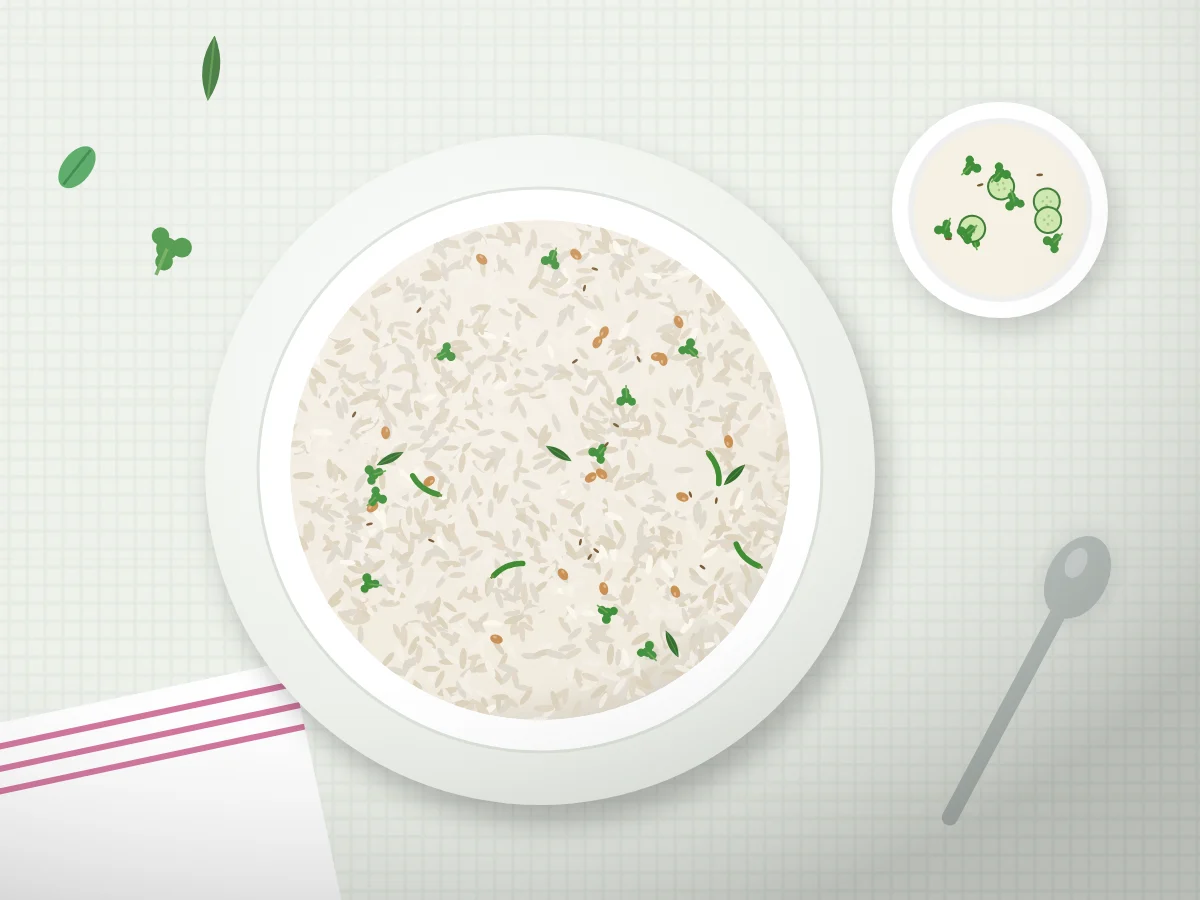
Recipe card
Maharashtrian Sabudana Khichdi
Soaked tapioca pearls cooked in ghee with cumin, green chilli, potato and roasted peanuts, seasoned with sendha namak.
- Prep
- 15 min
- Cook
- 15 min
- Soaking sabudana
- 6 hr
- Total
- 6 hr 30 min
- Serves
- 2
Ingredients
Makes 2 plates
Sabudana
- 1 cup medium sabudana (sago pearls)
- ¾ cup water for soakingapproximately, see step 2
- ½ cup raw peanuts
- ¾ tsp sendha namak (rock salt)or to taste
- 1 tsp sugar
Tempering
- 1½ tbsp ghee
- 1 tsp jeera (cumin seeds)
- 2 green chillieschopped
- 1 sprig curry leavesoptional
- 1 medium potatopeeled, cut into small cubes
To finish
- 1 tbsp lemon juice
- 2 tbsp coriander leaveschopped
You will need
- Bowl for soaking
- Heavy kadai or non-stick pan
- Mixer jar or rolling pin for peanuts
Method
Rinse the sabudana
Put the sabudana in a bowl, cover with water, swirl with your hand and pour the cloudy water off. Repeat 2 to 3 times until the water is only slightly cloudy. This removes loose starch that makes the khichdi gummy.
Soak with just enough water
Drain well, level the pearls with your hand, and pour in water until it just reaches the top of the pearls, not above them. For 1 cup medium sabudana this is about three quarters of a cup. Cover and leave for 6 hours or overnight.
Test a pearl
In the morning the pearls should have swollen and absorbed all the water. Press one between your thumb and finger: it should squash completely, with no hard white dot in the centre. If the centre is still hard, sprinkle 2 tbsp water, mix and wait another 30 minutes.
Roast and crush the peanuts
Dry roast the peanuts in the kadai on medium heat for 5 to 6 minutes until they crackle and smell roasted. Cool, rub off most of the skins, and pulse to a coarse powder with a few bits left whole. Do not grind to a paste.
Mix the pearls
Add the crushed peanuts, sendha namak and sugar to the soaked sabudana and mix gently with your fingers. The peanut powder coats each pearl and helps keep them apart in the pan.
Cook the potato
Heat the ghee in the kadai. Add jeera and let it sizzle, then green chillies and curry leaves. Add the potato cubes, cover and cook on low heat for 6 to 7 minutes, stirring once, until tender.
Add the sabudana
Add the sabudana mixture and stir gently, lifting from the bottom. Cook on low to medium heat for 4 to 6 minutes, uncovered, stirring every minute. The pearls are done when most of them turn translucent at the edges.
Finish
Switch off the heat as soon as the pearls are translucent; they stick if cooked longer. Add lemon juice and coriander, toss once and serve right away.
Tips that make the difference
- Medium pearls are the easiest to handle. Very large pearls need longer soaking and stay chewier.
- If your sabudana gets sticky every time, reduce the soaking water by 2 tbsp and see the difference.
- Use a non-stick or well seasoned kadai and keep the heat moderate. High heat makes the starch glue to the pan.
- Boiled potato saves time: add it cubed after the jeera and fry for 2 minutes instead of cover-cooking.
- Serve with a bowl of curd. It balances the starch and the chilli heat.
Storing: Sabudana khichdi hardens as it cools and does not reheat well. Eat it fresh. If you must keep it, refrigerate for up to 1 day and reheat with a sprinkle of water, covered, on low heat or in the microwave.
Soaking: the step that makes or breaks a sabudana khichdi recipe
Sabudana is almost pure starch. When it soaks, the pearls absorb water and swell; when they cook, that starch softens and turns translucent. If there is extra water sitting around the pearls, it turns into starchy glue the moment it hits the hot pan, and you get one big sticky lump. If there is too little, the core never hydrates and stays chalky no matter how long you cook.
The trick is to give the pearls only as much water as they can absorb, then let time do the work. Water just level with the top of the pearls is the right amount for most medium sabudana. In the morning, run your hand through the bowl: the pearls should feel soft, separate and almost dry, like soft beads, with no water pooled at the bottom.
Soaking times for small, medium and large pearls
Sabudana is sold in different sizes, and brands vary too. Use this as a starting point and always do the finger test.
| Pearl size | Water level | Soaking time |
|---|---|---|
| Small (fine sabudana) | Slightly below the top of the pearls | 2 to 3 hours |
| Medium (recipe card) | Just level with the top | 5 to 6 hours or overnight |
| Large or nylon sabudana | Half a centimetre above the top | 7 to 8 hours or overnight |
Nylon sabudana is a shiny, very white variety that stays more separate and is popular for khichdi. Small sabudana is better for kheer, where you want it to soften quickly. If you forget to soak at night, small pearls soaked in warm water can be ready in about 2 hours, but the texture is never quite as good.
Why peanuts matter, and how to make the plate more balanced
Peanuts do three jobs here. The coarse powder coats the pearls and keeps them from sticking to each other. The roasted flavour gives the khichdi its character. And they bring most of the protein and fat to a dish that is otherwise almost entirely carbohydrate.
It is worth being clear about this. One cup of sabudana is mostly starch, with very little protein, fibre or vitamins. It gives quick energy, which is why it is popular on fasting days, but on its own it is not a balanced meal. Some easy ways to improve it:
- Increase the peanuts to three quarters of a cup for the same amount of sabudana.
- Serve with a big bowl of plain curd or a cucumber raita. This is the single most useful change.
- Keep the potato modest, or swap half of it for cubes of boiled sweet potato.
- Eat a moderate portion, about half a cup of dry sabudana per person, alongside fruit.
- On non-fasting days, add a handful of peas and grated carrot with the potato.
If you want a breakfast with more protein on regular days, a savoury besan chilla or moong dal chilla does the job better.
Vrat notes: sendha namak and fasting rules
Sabudana khichdi is one of the most common sabudana recipes for fast days such as Ekadashi, Navratri and Mahashivratri. Fasting customs differ between families and regions, so follow your own household's practice. A few points most families agree on:
- Use sendha namak (rock salt) instead of regular table salt.
- No onion, garlic, hing or grains such as rice and wheat.
- Many families skip turmeric, mustard seeds and curry leaves on fasts, so the recipe card keeps curry leaves optional. Jeera, green chilli, ghee, peanuts, potato and lemon are widely accepted.
- Black pepper or a little ginger can replace green chilli if your family avoids it.
The Gujarati style is often a little sweeter and may include grated coconut; the Maharashtrian style, as on the recipe card, leans on peanuts, green chilli and lemon. Both are made the same way.
Sabudana vada and sabudana tikki
Sabudana vada is the crisp fried snack made from the same soaked pearls. For about 12 vadas, mix 1 cup soaked sabudana with 2 medium boiled and mashed potatoes, half a cup of coarsely crushed roasted peanuts, 2 chopped green chillies, 1 tsp jeera, sendha namak, lemon juice and coriander. Shape into flat patties with damp palms and deep fry in hot oil on medium heat until golden all over, about 4 minutes per batch. Turn them only once the first side is set, or they break.
This sabudana tikki recipe is the lighter route. Shape the same mix into smaller, thinner discs and cook them on a greased tawa with a little ghee, 3 to 4 minutes per side, or in an appe pan. Our appe page explains how to use that pan.
Sabudana kheer and mango sago
Sabudana kheer
Rinse a quarter cup of small sabudana and soak it in half a cup of water for 1 hour. Bring 3 cups milk to a boil, add the soaked pearls and simmer on low heat for 12 to 15 minutes, stirring often, until every pearl turns clear. Add 3 to 4 tbsp sugar, a pinch of cardamom and a few saffron strands, simmer 2 more minutes and top with chopped nuts. Serve warm or chilled. It thickens a lot in the fridge, so loosen it with a little milk.
Mango sago
This mango sago recipe is a summer dessert. Boil small sabudana in plenty of water for 10 to 12 minutes until clear, drain and rinse in cold water. Fold it into chilled mango pulp loosened with milk or coconut milk. Serve it cold. A sabudana papad recipe is a different project altogether, made by spreading cooked sago paste thin and sun drying it for days.
Sabudana ki recipe: Hindi and Marathi names
Most sabudana recipes in Hindi, whether titled sabudana ki recipe or sabudane ki recipe, use the same few words. In a sabudana khichdi recipe in Hindi, sabudana (साबूदाना) means sago pearls, sendha namak (सेंधा नमक) is rock salt and moongphali (मूंगफली) is peanuts. The method in short: sabudana bhigo do (soak), moongphali bhuno aur kootna (roast and crush peanuts), ghee mein jeera aur mirchi (temper), aloo pakao, phir sabudana milao. In Marathi homes it is sabudanyachi khichadi, served on fasting days with a bowl of dahi. The same words appear in any sabudana vada recipe in Hindi. A sabudana vada recipe in Marathi uses them too, since the vada keeps its name everywhere. A sabudana kheer recipe in Hindi will name it साबूदाना खीर.
For other quick morning dishes, see our full list of breakfast recipes, or compare with poha, another light dish that needs no grinding or fermenting.
Sticky, hard or lumpy: fixing sabudana khichdi
| What happened | Reason | How to fix |
|---|---|---|
| Sticky, mushy lump | Too much soaking water or pearls not rinsed | Spread the soaked pearls on a plate for 30 minutes to dry; add more peanut powder before cooking |
| Hard white centres | Not enough water, or soaked for too few hours | Sprinkle water, cover and rest 30 to 60 minutes before cooking |
| Turns chewy and rubbery | Cooked too long or on high heat | Take off the heat as soon as the pearls turn clear |
| Sticks to the pan | Thin pan, too little ghee | Use a non-stick kadai and stir gently from the bottom |
Questions cooks ask
How long should I soak sabudana for khichdi?
Medium pearls need 5 to 6 hours or an overnight soak with water just level with the top. Small pearls need 2 to 3 hours. Always check that a pressed pearl has no hard centre.
Why does my sabudana khichdi become sticky?
Usually too much soaking water, unrinsed pearls or overcooking. Rinse until the water is nearly clear, soak with just enough water to reach the top, and switch off the heat as soon as the pearls go translucent.
Is sabudana khichdi healthy?
It is filling and gives quick energy, but sabudana is mostly starch with little protein or fibre. Generous peanuts, a moderate portion and a bowl of curd make it a more balanced meal.
Can I make sabudana khichdi without potato?
Yes. Leave the potato out and cook the soaked sabudana directly after the tempering. Some families add cubes of boiled sweet potato or a little grated coconut instead.
Can I eat sabudana khichdi on a fast?
In most families, yes. It is a classic vrat dish when made with sendha namak and without onion, garlic or grains. Customs differ, so follow your family's rules on spices like turmeric and curry leaves.
Can I make sabudana khichdi in the microwave?
You can. Heat ghee with jeera and chilli for 1 minute, add the soaked sabudana mixed with peanuts and salt, and microwave for 2 to 3 minutes, stirring every minute, until translucent. The texture is slightly drier than the stovetop version.