
This poha recipe gives you the Maharashtrian kanda batata poha you get in a good Pune or Nagpur home: separate, soft flakes, tender potato, crunchy peanuts and a squeeze of lemon at the end. It is a recipe to make poha that works the first time, takes about half an hour and uses one kadai.
Most poha recipes skip the one step that matters. Poha goes wrong before the stove is even on. The flakes are either soaked too long and turn to paste, or barely wet and stay chewy. Below you will learn exactly how long to rinse thick and thin poha, how to test a flake before you cook, and how to make a lighter plate with peas, peanuts and sprouts. Indori poha, aval upma and dahi poha are covered as variations.
30 minServes 3Vegan393 kcal
Jump to recipe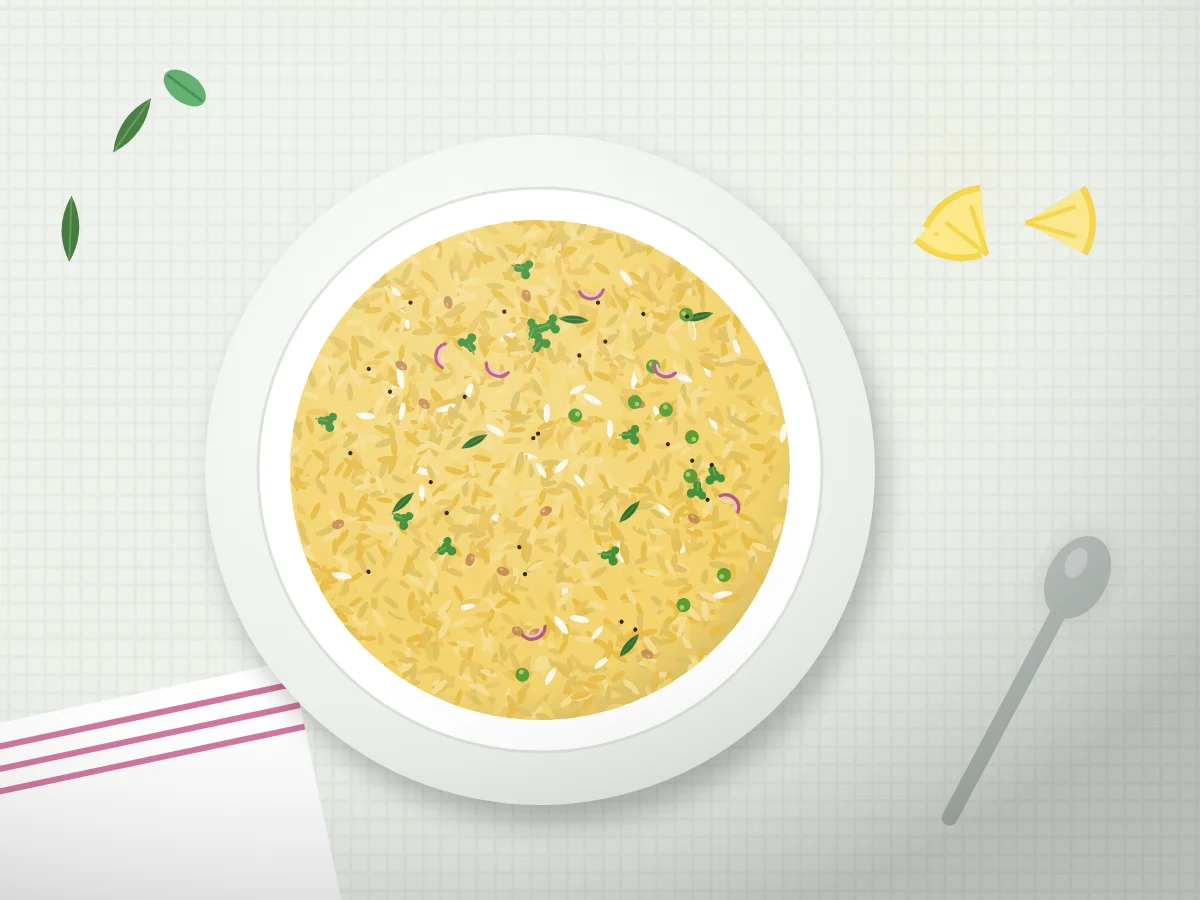
Recipe card
Maharashtrian Kanda Batata Poha
Soft, separate flattened rice flakes with onion, potato, peanuts, curry leaves and lemon.
- Prep
- 10 min
- Cook
- 20 min
- Total
- 30 min
- Serves
- 3
Ingredients
Makes 3 plates
Poha
- 2 cups thick poha (flattened rice)
- 1 tsp sugar
- ¾ tsp saltor to taste
Tempering and vegetables
- 1½ tbsp groundnut oil
- 3 tbsp raw peanuts
- 1 tsp rai (mustard seeds)
- ½ tsp jeera (cumin seeds)
- 1 sprig kadi patta (curry leaves)
- 2 green chilliesslit or chopped
- 1 medium onion (kanda)finely chopped
- 1 medium potato (batata)peeled, cut into 1 cm cubes
- ⅓ cup green peas, fresh or frozenoptional
- ½ tsp haldi (turmeric powder)
To finish
- 1 tbsp lemon juice
- 3 tbsp hara dhania (coriander leaves)chopped
- 2 tbsp fresh grated coconutoptional
You will need
- Kadai or wide non-stick pan
- Large sieve or colander
- Flat spatula
Method
Rinse the poha
Put the poha in a large sieve and hold it under running water for 20 to 30 seconds, tossing with your fingers so every flake gets wet. Do not leave it sitting in a bowl of water. Shake off the excess and spread it in the sieve.
Season and rest
Sprinkle the salt and sugar over the damp poha and toss lightly with your fingertips. Leave it for 8 to 10 minutes while you start the tempering. A flake pressed between two fingers should mash easily; if it still feels hard, sprinkle 1 to 2 tbsp water and toss again.
Fry the peanuts
Heat the oil in a kadai on medium heat. Add the peanuts and fry, stirring, for 2 to 3 minutes until they crackle and the skins turn darker. Lift them out with a slotted spoon and keep aside.
Make the tadka
In the same oil, add the mustard seeds and wait until they splutter. Add the cumin, curry leaves and green chillies and stir for 15 seconds until the leaves turn crisp.
Cook the onion
Add the onion and cook for 2 to 3 minutes until soft and translucent but not brown. Kanda poha should taste sweet from the onion, not smoky.
Cook the potato
Add the potato cubes, peas, turmeric and a pinch of salt. Stir, cover and cook on low heat for 7 to 9 minutes, stirring once or twice, until a cube breaks easily when pressed with the spatula.
Add the poha
Tip in the rested poha. Fold it in gently with a flat spatula, lifting from the bottom, until the colour is an even pale yellow. Do not press or stir hard, or the flakes will break.
Steam briefly
Cover the kadai and keep on the lowest heat for 2 minutes so the poha softens in its own steam. Open, fluff once and switch off the heat.
Finish and serve
Add the lemon juice, coriander, coconut and the fried peanuts. Toss once and serve hot, with extra lemon on the side.
Tips that make the difference
- Thick poha is the safest choice for this dish. Thin poha needs only a sprinkle of water, not a rinse under the tap.
- Add salt and sugar to the poha before it goes into the kadai so it seasons evenly without extra stirring.
- Cut the potato small. Large cubes take so long that the onion burns while you wait.
- Add lemon only after switching off the heat; cooked lemon turns bitter.
- If you are making poha for six, use two kadais or cook in two rounds. A crowded pan steams the flakes into lumps.
Storing: Poha is best eaten within an hour. Leftovers keep in a covered box in the fridge for 1 day; sprinkle 1 to 2 tsp water and warm covered on low heat or in the microwave for a minute.
Why this poha recipe stays soft and fluffy
Poha (flattened rice) is rice that has been parboiled, pressed flat and dried. It is already cooked, so it only needs to absorb enough water to soften, then a few minutes of heat. Every problem with poha comes from getting that water wrong.
This method fixes the amount in three ways. You rinse under running water instead of soaking, so each flake takes in only what clings to it. You let it rest with salt and sugar so the moisture spreads evenly. And you finish with a short covered steam on low heat, which softens any flake that is still firm without adding more water. The result is separate flakes that are soft through but not wet.
How to rinse thick, medium and thin poha
Poha is sold in different thicknesses, and each one needs different handling. Check the packet or look at the flakes: thick poha is stiff and opaque, thin poha is almost papery.
| Type | How to wet it | Rest | Best for |
|---|---|---|---|
| Thick (jada) | Rinse in a sieve under the tap for 20 to 30 seconds | 8 to 10 minutes | Kanda poha, Indori poha, aval upma |
| Medium | Rinse for 10 to 15 seconds, drain at once | 5 minutes | Everyday poha if thick is not available |
| Thin (patal) | Do not rinse; sprinkle 2 to 3 tbsp water or mix with curd | 2 to 3 minutes | Dahi poha, chivda, dadpe pohe |
The finger test works for all types. Pick up one flake and press it. It should squash flat without a hard centre and without turning to paste. Red poha (made from red rice) is coarser and takes a few more minutes of rest.
Kanda poha, batata poha and the Maharashtrian way
In Maharashtra this dish is called kande pohe, and it is what families serve when guests come to visit. A plain kanda poha recipe uses only onion; batata poha adds potato; most homes do both, which is what the recipe card gives you. The Marathi style keeps it simple: mustard, cumin, curry leaves, green chilli, a little sugar and lemon, with fresh coconut and coriander on top.
If you want this poha recipe in Marathi words, call it a pohe recipe; the steps do not change: pohe dhuvun ghya (rinse the poha), mohari, jeera, kadhipatta ani mirchi chi phodni dya (make the tempering), kanda ani batata shijvun ghya (cook onion and potato), mag pohe ghala (then add the poha). For aloo poha in a hurry, you can use a boiled potato and skip the covered cooking in step 6.
Poha banane ki recipe: Hindi names and key terms
For readers who think in Hindi, here are the words you will see in a poha recipe in Hindi, so you can follow along easily.
- Poha (पोहा): flattened rice, also called chivda or chura in parts of North India.
- Rai (राई): mustard seeds, and jeera (जीरा): cumin seeds.
- Kadi patta (कढ़ी पत्ता): curry leaves.
- Kanda or pyaz (प्याज): onion, and aloo or batata (आलू): potato.
- Haldi (हल्दी): turmeric, and hara dhania (हरा धनिया): fresh coriander.
- Moongphali (मूंगफली): peanuts.
The poha ki recipe in Hindi homes of Madhya Pradesh is usually the Indori style below; in Maharashtra and Gujarat it is closer to the recipe card. In Kannada, poha is avalakki; in Tamil and Malayalam, it is aval.
Healthier vegetable poha recipe with peas, peanuts and sprouts
Plain poha is mostly carbohydrate with a little fat from the oil and peanuts. A few changes make it a more balanced breakfast without changing its character.
- Use more vegetables, less potato. For a veg poha recipe, replace half the potato with chopped carrot, capsicum and peas. Add carrot with the potato; add capsicum with the onion so it stays a little crisp.
- Add moong sprouts. Stir in half a cup of moong sprouts with the potato and cover-cook them together. They add bite, some protein and fibre.
- Keep the peanuts. Peanuts give poha most of its protein and make it more filling. Dry roast them if you want to cut a little oil.
- Watch the oil. One and a half tbsp is enough for three plates in a non-stick kadai.
- Pair it with protein. Curd or a glass of milk on the side does more than any change to the poha itself.
If you are looking for a weight loss poha recipe, portion size matters most. One cup of dry poha makes about two moderate plates. Let vegetables make up half of what you serve, keep the peanuts, and you have a breakfast that holds you until lunch. For a breakfast with more protein, try moong dal chilla on alternate days.
Indori poha, aval upma and other variations
Indori poha
Indore poha is steamed rather than stir-fried. Mix the rinsed poha with salt, sugar, turmeric and a little oil, then steam it over a pan of simmering water (or in a covered kadai on very low heat) for 5 to 7 minutes until soft. Serve it topped with raw chopped onion, sev, pomegranate seeds, fennel seeds and a sprinkle of jeeravan masala, a tangy cumin spice mix. A few homes add fried boondi too.
Aval upma (South Indian)
For aval upma, change the tempering: 1 tsp urad dal and 1 tsp chana dal fried golden in coconut oil, with mustard, dry red chilli, curry leaves, ginger and a pinch of hing (asafoetida). Skip the potato and sugar, add grated carrot or beans, and finish with plenty of fresh coconut. It is the cousin of our rava upma, made with flakes instead of semolina.
Dahi poha
This dahi poha recipe needs no stove for the flakes. Mix 1 cup thin poha with 1 cup beaten curd, salt and a little sugar. Pour a hot tempering of mustard, curry leaves and green chilli over it and eat cold.
Poha chivda
A poha chivda recipe gives you a dry tea-time snack, not a breakfast. Roast thin poha in a kadai on low heat until crisp, then toss with a tempering of peanuts, roasted chana dal, curry leaves, turmeric, salt and powdered sugar. Cool completely and store airtight.
When poha turns out wrong
| What you see | Cause | Fix |
|---|---|---|
| Mushy, sticky poha | Soaked in water or used thin poha | Spread on a plate to dry for 5 minutes, then toss on high heat for 1 minute. Next time, rinse only. |
| Hard, chewy flakes | Too little water or too short a rest | Sprinkle 2 tbsp water, cover and steam on low for 2 to 3 minutes. |
| Dry poha | Too much heat after adding flakes | Sprinkle a little water and add a few drops of oil, cover for a minute. |
| Uneven yellow patches | Turmeric added late or poha not folded well | Add turmeric with the potato so it spreads through the oil first. |
| Bitter taste | Lemon added on the flame | Always add lemon after switching off. |
What to serve with poha, and lunchbox notes
In Maharashtra poha comes with a cup of hot tea and sometimes a spoon of thin sev on top. For a fuller meal, add plain dahi, a boiled egg, or sliced fruit. Usal poha (tarri poha in Nagpur) is a heartier version where poha is served with a spicy sprouts curry poured over it.
For tiffin, pack poha while still warm into a steel box and leave the lid slightly open for 5 minutes so steam does not make it soggy. Keep the lemon wedge and peanuts separate if you can. For more morning ideas, see our healthy breakfast recipes, or try steamed dhokla on a weekend.
Questions cooks ask
Should I soak poha in water before cooking?
No. Rinse it in a sieve under running water for 20 to 30 seconds and let it rest. Soaking in a bowl lets the flakes absorb too much and turns them mushy.
Can I make this simple poha recipe without potato?
Yes. Skip the potato and the covered cooking in step 6, and you have plain kanda poha ready in about 15 minutes. Add a handful of peas for colour.
Why is sugar added to poha?
A small amount balances the lemon, chilli and salt. It is traditional in Maharashtrian and Gujarati poha. You can leave it out and the dish still works.
Is poha a good breakfast for weight loss?
Poha is moderate in calories when you keep oil to about half a tbsp per plate and add vegetables. It is low in protein on its own, so pair it with curd, sprouts or an egg so it keeps you full longer.
What is the difference between poha and upma?
Poha is made from flattened rice and only needs rinsing, while upma is made from roasted semolina cooked in boiling water. Both use a similar tempering. See our upma recipe for the method.
Can I make poha the night before?
It is best fresh. You can chop the onion and potato the night before and keep them in the fridge, which cuts morning work to about 15 minutes.
Is poha gluten free?
Poha is made from rice, so it contains no wheat. If you add sev or packaged toppings, check those, as many contain wheat flour or are fried with hing that has wheat in it.