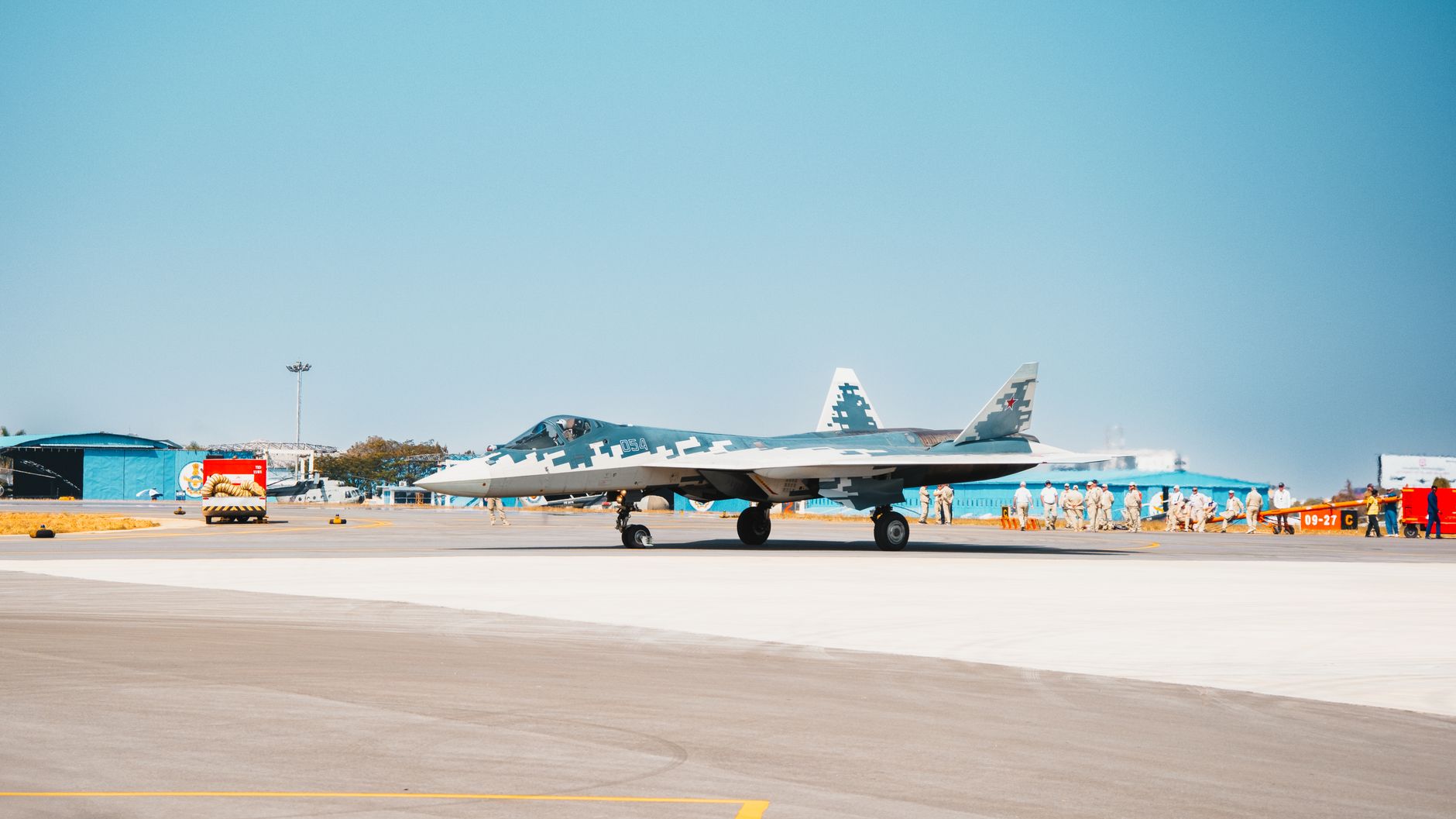
The Russian Su-35 jets collision has raised serious concerns about aviation safety. Two jets collided mid-air over the Kursk region, leading to an investigation.
Details of the Russian Su-35 jets collision
Details have emerged regarding the recent collision involving two Russian Su-35 jets, marking one of the worst mid-air incidents in recent history. The accident occurred over the Kursk region, leading to significant concerns about the safety protocols in place for military aircraft.
According to official reports, the collision happened during a routine training exercise. Eyewitnesses described a shocking scene as the jets locked in a mid-air struggle, resulting in debris scattering across a vast area. Both aircraft reportedly experienced catastrophic failure, prompting immediate emergency response measures.
The Ministry of Defense has launched an investigation into the Russian Su-35 jets collision, focusing on several critical aspects:
- Pilot Error: Initial findings suggest that human error may have played a significant role in the accident.
- Maintenance Issues: Scrutiny of the aircraft’s maintenance history is underway to determine if any mechanical failures contributed.
- Training Procedures: The training protocols for the pilots involved are being evaluated to identify potential lapses in safety practices.
This tragic event raises questions about the operational safety of military aviation in Russia and highlights the need for stringent oversight to prevent similar incidents in the future. As investigations continue, the families of the pilots involved await updates with heavy hearts.
Investigation into the mid-air incident
The investigation into the Russian Su-35 jets collision is currently underway, with authorities scrambling to uncover the circumstances surrounding this tragic event. Initial reports suggest that the two fighter jets were engaged in a routine training exercise when the collision occurred over the Kursk region, a location often utilized for military maneuvers.
Witnesses in the area reported hearing a loud noise followed by the sight of debris falling from the sky. Eyewitness accounts have been crucial in piecing together the timeline of events leading up to the mid-air incident. Preliminary findings indicate that there may have been a miscommunication between the pilots, which could have contributed to the accident.
In response to the incident, the Russian Ministry of Defense has launched a thorough inquiry. A specialized team is examining the wreckage and reviewing flight data to determine the precise cause of the collision. Key areas of focus for the investigation include:
- Communication protocols between the pilots
- Adherence to safety regulations during the training exercise
- Possible mechanical failures of the aircraft
As the investigation progresses, officials emphasize the importance of transparency and thoroughness in understanding the factors that led to the Russian Su-35 jets collision. The findings may impact future training procedures and safety measures within the Russian Air Force.
Impact on military aviation safety
The recent collision between Russian Su-35 jets has raised significant concerns regarding military aviation safety. As one of the most advanced fighter aircraft, the Su-35 is designed for high maneuverability and performance, yet this incident highlights potential vulnerabilities in operational protocols.
Experts are now calling for a thorough review of flight safety measures within the Russian Air Force. The collision, described as the worst mid-air incident in recent years, has prompted discussions about the following key issues:
- Training and Readiness: There is a pressing need to evaluate the training programs for pilots, particularly in emergency response and real-time decision-making during complex flight operations.
- Operational Procedures: The collision suggests possible lapses in adherence to established operational procedures, motivating a reassessment of existing guidelines to ensure they are robust and up-to-date.
- Technological Upgrades: Investigators are urging for enhancements in collision avoidance systems and communication technology to prevent similar incidents in the future.
- Accountability and Oversight: Questions regarding accountability for the mishap have surfaced, emphasizing the need for a transparent oversight mechanism to foster a culture of safety within military aviation.
The implications of the Russian Su-35 jets collision extend beyond immediate safety concerns, potentially influencing international perceptions of Russian military capabilities.
Witness accounts from the Kursk region
Witnesses from the Kursk region have begun to share their harrowing accounts of the recent collision involving Russian Su-35 jets. The incident, which has been described as one of the worst mid-air accidents in recent history, unfolded during a routine training exercise.
Local residents reported seeing the two fighter jets maneuvering in the sky before the catastrophic collision occurred. Ivan Petrov, a farmer who witnessed the event, recounted, “I heard a loud roar, and then I saw the planes spiraling out of control. It was shocking to see such powerful machines in distress.”
Another witness, Anna Smirnova, shared her experience: “The sky filled with smoke and debris. It felt like a scene from a movie, but it was real and terrifying.” Many witnesses described the sound of the crash as deafening, impacting not only the immediate area but also reaching several kilometers away.
Residents expressed their concerns about the safety of military operations in the region, citing that the Russian Su-35 jets collision raised questions about pilot training and operational protocols. Viktor Ivanov, a former military pilot, stated, “This incident could have been avoided with better communication and situational awareness.” The community is now left grappling with the implications of this tragic event.
Expert analysis on collision causes
In light of the recent Russian Su-35 jets collision, experts have begun to analyze the potential causes of this tragic incident. The mid-air collision, which resulted in significant damage to both aircraft, has raised numerous questions about operational protocols and pilot training within the Russian military.
One primary factor under scrutiny is the communication practices among pilots during training exercises. Inadequate communication can lead to misjudgments during critical maneuvers, increasing the risk of collisions. Experts emphasize the need for enhanced communication systems and real-time data sharing to prevent such incidents in the future.
Another aspect being evaluated is aircraft maneuverability and the pilots’ ability to respond swiftly to unexpected situations. The Su-35 is a highly advanced fighter jet, yet the complexity of its systems can pose challenges for even the most skilled pilots. Training programs must adapt to address these complexities effectively.
Moreover, the psychological factors influencing pilots during high-pressure situations are also under examination. Stress and fatigue can impair decision-making, leading to tragic outcomes like the Russian Su-35 jets collision. Experts advocate for improved mental health resources and support systems within military aviation.
As investigations continue, it is clear that a comprehensive understanding of these factors is essential to enhance the safety and effectiveness of military aviation operations.
The recent investigation into the Russian Su-35 jets collision has uncovered critical details about the events leading up to the tragic incident. Eyewitness accounts suggest that the Russian Su-35 jets collision may have been caused by a series of miscommunications among the pilots involved.
Photo by Sachin Shettigar on Pexels
Where this came from
Related stories
August Jobs Report: What to Expect from This Critical Update · Understanding the Role of Gynecologists in PCOS Management · Navigating the IronFX Portail: Tools, Tips, and Best Practices